Growth
Startup Valuation in 2026: New Metrics Investors Care About
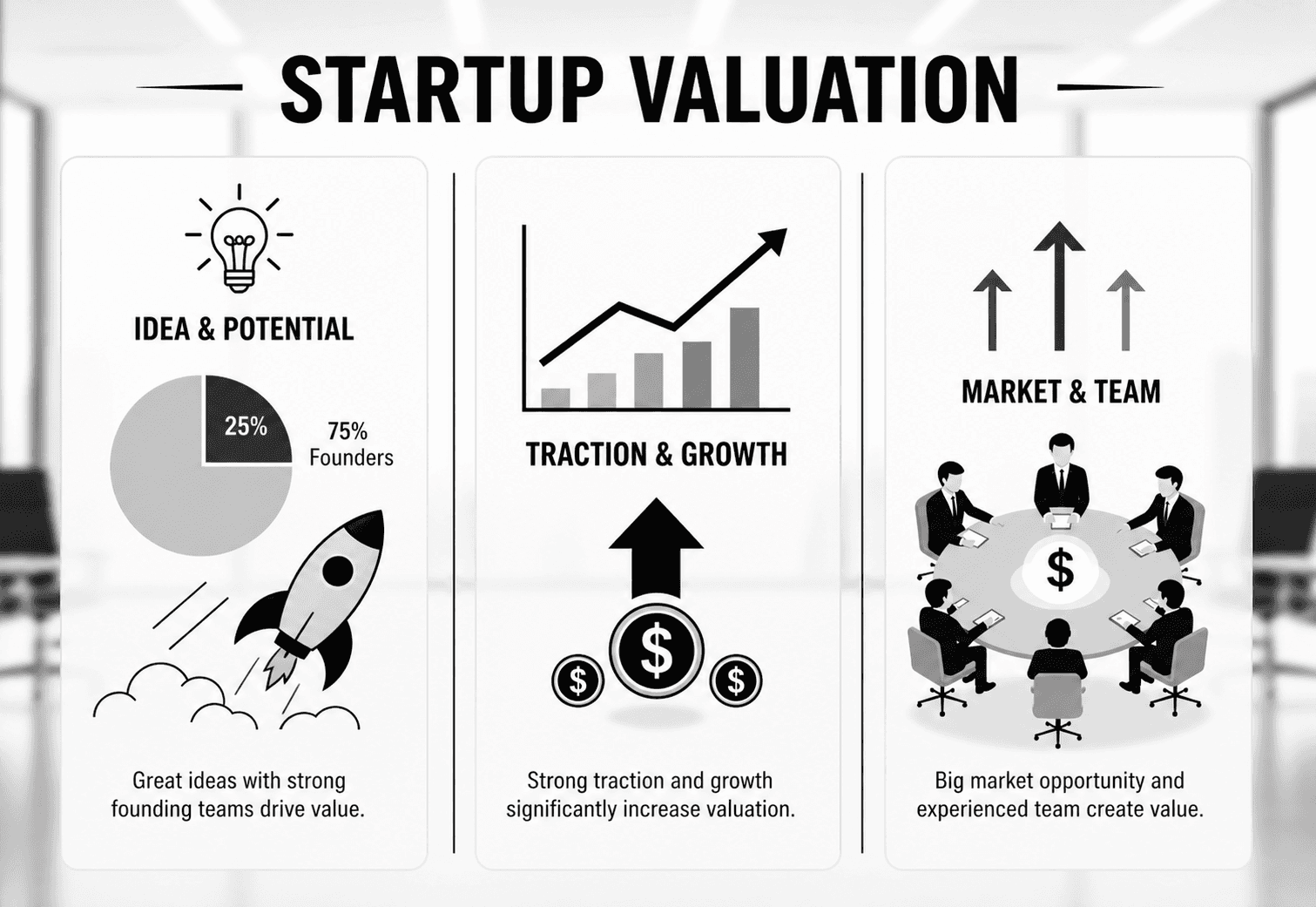
Startup valuation in 2026 looks very different from what it was even a few years ago. As global markets stabilize after prolonged volatility, investors are shifting focus toward clarity, sustainability, and data-backed performance. This change has brought new startup valuation metrics investors care about into the spotlight, influencing how businesses are assessed today. Founders now need to align their growth plans with new startup valuation metrics investors care about, as traditional benchmarks alone are no longer enough. These evolving expectations are reshaping venture capital discussions, funding negotiations, and long-term planning. Understanding new startup valuation metrics investors care about allows startups to position themselves more effectively.
Overall, startup valuation in 2026 reflects a more disciplined, transparent, and value-driven approach to building scalable businesses.
1. Profitability Over Pure Potential
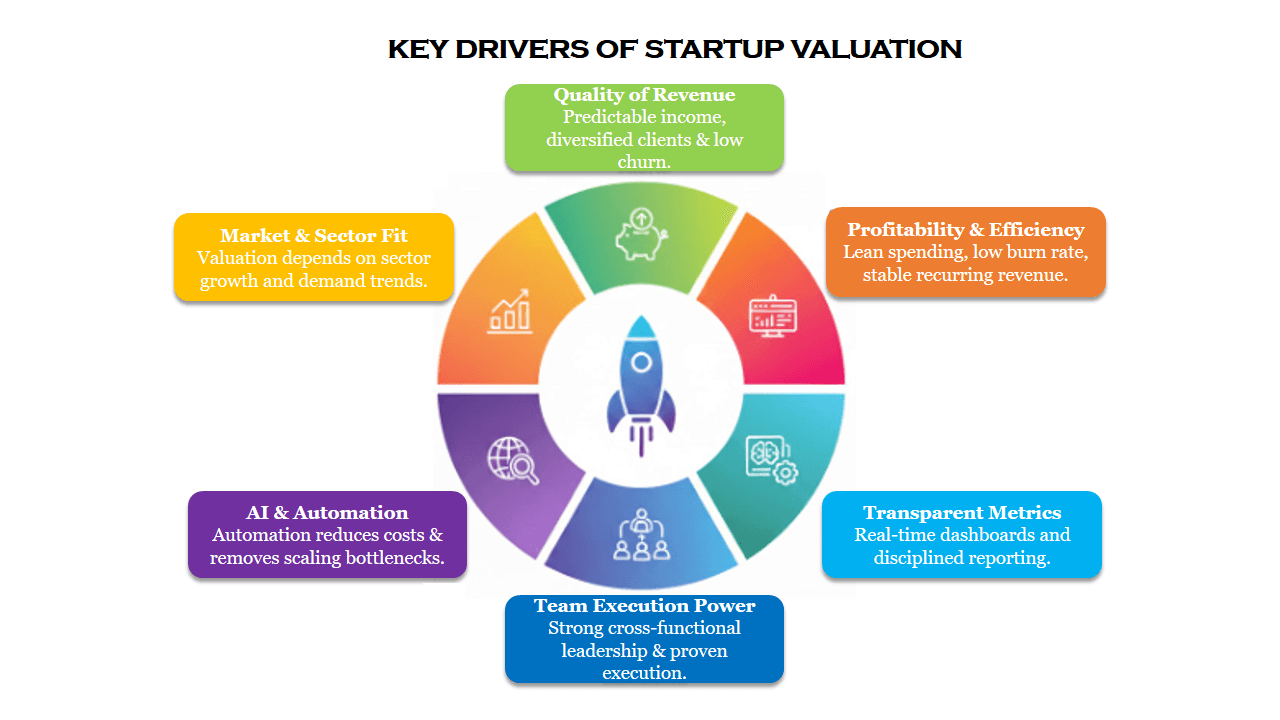
For a long time, early-stage valuation focused heavily on future promise. Today, how startups are valued in 2026 places greater emphasis on performance and efficiency. Investors want proof that a business can scale sustainably. Burn multiple, customer acquisition cost, and contribution margin have become key valuation metrics for startups, directly influencing pre-money valuation.
This shift reflects changing investor valuation criteria startups must meet, where disciplined spending matters more than aggressive projections. Understanding what investors look at in startup valuation helps founders prioritise sustainable growth over hype.
2. Quality of Revenue Is a Deal Maker
Revenue alone is no longer enough. When analysing how startups are valued in 2026, investors closely examine recurring income, customer diversity, and churn levels. These elements are now essential valuation metrics for startups, especially during venture capital discussions.
Strong revenue quality aligns with modern investor valuation criteria startups, as it lowers risk. This is also central to what investors look at in startup valuation when assessing long-term viability.
3. Data Transparency and Metrics Discipline
Clear financial reporting has become critical in how startups are valued in 2026. Transparent data and disciplined tracking improve credibility and strengthen negotiations. Accurate dashboards and reporting tools support reliable valuation metrics for startups.
Such transparency directly supports evolving investor valuation criteria startups are expected to meet. It also addresses what investors look at in startup valuation, particularly during funding discussions.
4. AI Adoption and Operational Efficiency
Technology adoption now plays a major role in how startups are valued in 2026. Efficient use of AI and automation reflects operational maturity and scalability. Investors treat these capabilities as modern valuation metrics for startups, not optional features.
This aligns with updated investor valuation criteria startups must satisfy. AI usage is increasingly part of what investors look at in startup valuation when assessing competitiveness.
5. Team Quality and Execution Power
Execution strength remains a core element of how startups are valued in 2026. Founders with strong leadership and adaptability score higher across key valuation metrics for startups.
Team capability is central to investor valuation criteria startups, as execution reduces uncertainty. It continues to define what investors look at in startup valuation, especially in early and growth stages.
6. Market Conditions and Sector-Specific Multiples
Sector trends significantly influence how startups are valued in 2026. High-growth areas like AI, climate tech, and fintech infrastructure attract stronger valuation metrics for startups.
Macro factors also shape investor valuation criteria startups must navigate. Resilience to external changes remains a vital part of what investors look at in startup valuation.
7. The Rise of Milestone-Based Valuation
Milestone-based funding structures are reshaping how startups are valued in 2026. Performance-linked funding aligns incentives and supports fairer valuation metrics for startups.
This approach reflects evolving investor valuation criteria startups face today and directly ties into what investors look at in startup valuation during funding rounds.
Conclusion
How startups are valued in 2026 is now driven by data, discipline, and execution. Strong fundamentals, clear reporting, and sustainable growth define modern valuation metrics for startups.
Meeting evolving investor valuation criteria startups requires transparency and focus. Ultimately, understanding what investors look at in startup valuation helps founders build businesses designed for long-term success, not short-term hype.
FAQ
Frequently Asked Questions
What is the biggest factor influencing startup valuation in 2026?
We work with organizations across various industries, from growing startups to established companies. Our approach is flexible and tailored to each client’s specific goals and challenges.
Why do investors now focus on the quality of revenue instead of total revenue?
We work with organizations across various industries, from growing startups to established companies. Our approach is flexible and tailored to each client’s specific goals and challenges.
What is considered a healthy valuation for a startup?
We work with organizations across various industries, from growing startups to established companies. Our approach is flexible and tailored to each client’s specific goals and challenges.
How is early-stage startup valuation calculated without high revenue?
We work with organizations across various industries, from growing startups to established companies. Our approach is flexible and tailored to each client’s specific goals and challenges.
Why do investors care so much about the founding team?
We work with organizations across various industries, from growing startups to established companies. Our approach is flexible and tailored to each client’s specific goals and challenges.
How can founders reduce equity dilution during funding rounds?
We work with organizations across various industries, from growing startups to established companies. Our approach is flexible and tailored to each client’s specific goals and challenges.